Lab report topics for college students

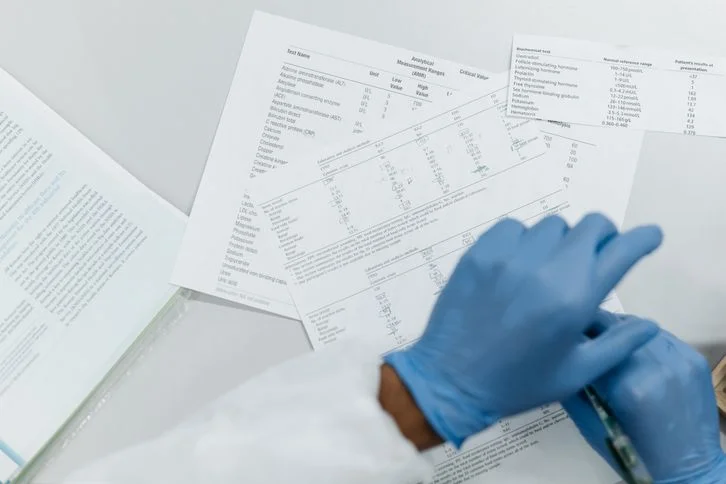
Choosing strong lab report topics is easier when you understand what makes a topic practical, measurable, and appropriate for your course level. A good lab report does not simply describe an experiment. It explains a clear question, shows how you tested it, presents reliable data, and connects the results to scientific concepts.
This guide gives you organized lab report ideas across common college subjects, explains what topics you should avoid, and shows how to narrow a broad idea into a focused assignment. You will also find practical writing tips and internal resources that can help when you need more detailed support with structure, formatting, abstracts, or discussion sections.
In summary, strong lab report topics usually have several qualities.
- They focus on one testable scientific question.
- They can be completed with available materials, equipment, and class time.
- They allow you to collect measurable data rather than rely on opinion.
- They match your instructor’s requirements and safety rules.
- They give you enough room to explain the method, results, and meaning of the findings.
Before you choose from the lab report topic ideas below, review your syllabus, grading rubric, lab manual, and instructor’s notes. These sources usually define the expected format, approved experiment types, citation style, and level of complexity.
Lab report topic list
The best lab report topics for students are specific enough to test but broad enough to explain in a full academic paper. Instead of choosing a general idea like plant growth, you can study how different light colors affect the growth rate of bean seedlings over ten days. That version gives you a clear variable, measurable results, and a realistic time frame.
Below are grouped lab report ideas from common college subjects. You can adapt each topic to your course level, available equipment, safety rules, and instructor’s expectations.
Biology lab report topics
Biology lab report topics usually focus on living organisms, biological processes, growth patterns, or the effect of environmental factors on cells and systems.
- The effect of light intensity on plant growth.
- The relationship between temperature and enzyme activity.
- The effect of pH on seed germination.
- The impact of sugar concentration on yeast fermentation.
- The influence of exercise on heart rate recovery.
- The effect of different water types on plant development.
- The relationship between soil nutrients and seedling growth.
- The effect of caffeine on heart rate in a safe model organism.
Chemistry lab report topics
Chemistry lab report topics often involve reactions, concentration, pH, solubility, acids, bases, and measurable changes in substances.
- The effect of concentration on reaction rate.
- The accuracy of titration in determining acid concentration.
- The effect of temperature on solubility.
- The pH levels of common household liquids.
- The relationship between surface area and reaction speed.
- The effect of catalysts on chemical reaction time.
- The comparison of natural and synthetic pH indicators.
- The effect of water hardness on soap effectiveness.
Physics lab report topics
Physics lab report ideas work best when they involve measurable forces, motion, energy, electricity, sound, or light.
- The effect of mass on acceleration down an inclined plane.
- The relationship between pendulum length and period.
- The effect of surface texture on friction.
- The relationship between voltage and current in simple circuits.
- The effect of angle on projectile distance.
- The relationship between spring extension and applied force.
- The effect of material type on heat transfer.
- The influence of surface area on air resistance.
Environmental science lab report topics
Environmental science lab report topics are useful when you want to study soil, water, pollution, ecosystems, sustainability, or natural resources.
- The effect of water quality on aquatic plant growth.
- The impact of soil type on water retention.
- The effect of compost on soil nutrient levels.
- The relationship between air pollution indicators and leaf surfaces.
- The effect of different fertilizers on plant growth.
- The comparison of biodegradable and nonbiodegradable material breakdown.
- The effect of sunlight exposure on water temperature in different containers.
- The impact of salt concentration on soil health.
Psychology lab report topics
Psychology lab report topics should be simple, ethical, and based on measurable behavior or cognitive performance. Always check your instructor’s rules before collecting data from people.
- The effect of background music on short-term memory.
- The relationship between sleep duration and reaction time.
- The effect of color on attention in a visual task.
- The influence of distractions on task completion time.
- The effect of word order on recall accuracy.
- The relationship between screen time and perceived concentration.
- The effect of positive reinforcement on learning speed.
- The influence of time pressure on decision-making accuracy.
Anatomy and physiology lab report topics
Anatomy and physiology topics often focus on body systems, movement, breathing, heart rate, and physical responses to different conditions.
- The effect of posture on breathing rate.
- The relationship between exercise intensity and pulse rate.
- The effect of hand dominance on grip strength.
- The influence of body position on blood pressure readings.
- The relationship between physical activity and recovery time.
- The effect of breathing technique on relaxation response.
- The comparison of resting heart rate before and after light activity.
- The effect of hydration level on perceived physical performance.
Microbiology lab report topics
Microbiology lab report topics should always follow approved safety protocols and use classroom-safe organisms, samples, and procedures.
- The effect of disinfectants on bacterial growth.
- The comparison of bacterial growth on different surfaces.
- The effect of temperature on microbial growth rate.
- The influence of handwashing methods on bacteria reduction.
- The effect of natural substances on microbial growth.
- The comparison of covered and uncovered food samples.
- The effect of storage conditions on mold growth.
- The relationship between moisture and microbial growth.
General science lab report topics
General science topics are flexible and can work well for introductory college courses or interdisciplinary science assignments.
- The effect of container material on water temperature change.
- The relationship between liquid type and evaporation rate.
- The effect of insulation material on heat retention.
- The comparison of paper towel absorbency across brands.
- The effect of salt on the freezing point of water.
- The relationship between object shape and sinking speed.
- The effect of light exposure on color fading.
- The comparison of natural and artificial cleaning solutions.
These lab report topics can also be turned into more advanced research questions. For example, a simple chemistry topic about pH can become a comparison of accuracy between litmus paper, digital meters, and indicator solutions. A biology experiment about plant growth can become more precise by adding controlled variables such as soil type, watering schedule, and exposure time.
If you are writing in chemistry, start with the chemistry lab report guide to see how methods, observations, calculations, and safety notes usually fit together. If your instructor expects a formal scientific structure, the lab report writing guide can help you organize the introduction, methods, results, and conclusion.
Topics to avoid in a lab report
Not every scientific question works well for a college assignment. Some lab report topics sound interesting but become difficult to complete because they are too broad, unsafe, unmeasurable, or dependent on tools you do not have. Choosing the wrong topic can make the writing process harder, even if the idea seems creative at first.
Avoid topics that create preventable problems.
- Topics that are too broad, such as climate change, human intelligence, or disease prevention, because they are difficult to test in one class experiment.
- Topics that rely on personal opinion, because a lab report needs measurable evidence rather than preferences or beliefs.
- Topics that require unsafe chemicals, biological samples, or equipment that your course has not approved.
- Topics that need long-term observation beyond your assignment deadline.
- Topics that involve human subjects without permission, consent, or instructor approval.
- Topics that duplicate a published experiment without adding your own variable, method, or angle.
- Topics that cannot produce enough data for tables, graphs, or meaningful analysis.
You should also be careful with popular lab report ideas that appear simple but lack enough depth. For example, testing whether plants “grow better with music” may not be strong unless you define the type of music, volume level, exposure time, plant type, light conditions, and measurement method. Without these details, your experiment may feel vague and hard to defend.
Another common issue is choosing a topic because it sounds impressive rather than because it fits the assignment. A basic, well-controlled experiment is usually better than an ambitious topic that cannot be tested properly. Your instructor will often value clarity, accuracy, and analysis more than complexity.
How to choose a good lab report topic
A strong topic should help you write every part of the paper. It should lead naturally into the introduction, hypothesis, materials, method, results, and discussion. If you cannot imagine how you would collect data or explain the results, the topic probably needs to be narrowed.
Use this process to choose among lab report topics for your class.
- Start with your course subject and recent lessons. Choose a topic connected to concepts your instructor already covered, such as enzymes, solubility, motion, memory, or ecosystems.
- Turn a broad idea into a testable question. Instead of “water quality,” ask how water pH affects the growth rate of aquatic plants over a set period.
- Identify the independent and dependent variables. Decide what you will change and what you will measure.
- Check whether the experiment is realistic. Make sure you have access to safe materials, enough time, and a way to collect reliable data.
- Make the topic narrow enough for one report. Focus on one main relationship instead of trying to test several ideas at once.
- Confirm the topic with your rubric. Match your choice to the required length, format, citation style, and course level.
When comparing lab report ideas, think about what your final data will look like. Strong topics often produce numbers that can be placed in a table or graph. Height, time, temperature, concentration, reaction rate, pH, mass, and accuracy are easier to analyze than general impressions.
You can also ask whether the topic gives you enough room for interpretation. The best lab report topics do not end with a simple yes or no. They let you discuss patterns, unexpected results, limitations, and possible improvements. This is especially important when you write the discussion section, because that part explains what your findings mean.
Tips for writing a strong lab report
Once you choose a topic, the next step is turning the experiment into a clear academic paper. Your writing should be precise, objective, and organized. You do not need dramatic language or overly complicated terms. You need a logical explanation of what you tested, how you tested it, what you found, and why the results matter.
These tips can help you improve the first draft of the report.
- Write a focused introduction that explains the scientific background and leads to your hypothesis.
- Describe the method clearly enough that another student could repeat the experiment.
- Present results in tables or graphs when numerical data is available.
- Keep the results section factual and save interpretation for the discussion.
- Explain whether the findings support the hypothesis and why.
- Discuss limitations such as small sample size, measurement errors, uncontrolled variables, or time constraints.
- Use formal academic language and avoid first-person claims unless your instructor allows them.
- Cite sources when you explain scientific concepts, background information, or established methods.
- Proofread for unit consistency, grammar, formatting, and accurate labels on visuals.
One of the most important parts of your lab report is the abstract. Even though it appears near the beginning, many students write it last because it summarizes the purpose, method, results, and conclusion. If you need help with that part, review the lab report abstract guide before submitting your final paper.
You should also make sure your report does not just list data. The strongest papers connect the data to the original research question. For example, if your results show that enzyme activity increased at moderate temperatures but decreased at high temperatures, explain the biological reason behind that pattern. If your results differ from expectations, discuss possible errors or limitations without overstating your conclusions.
If you are overwhelmed by the format, data analysis, or revision process, academic writing support can help you understand how to structure your work. A lab report writing service may be useful when you need guidance with organization, editing, or formatting. If your deadline is close and you are thinking, “Can someone write my lab report?” make sure any help you use follows your school’s academic integrity rules and supports your learning.
Conclusion
Choosing lab report topics for students becomes much easier when you focus on testable questions, clear variables, measurable results, and realistic methods. A strong topic does not have to be complicated. It should simply allow you to conduct a safe experiment, collect data, and explain what the results show.
Use the lab report ideas in this guide as starting points, then adapt them to your course requirements. Narrow the topic, define your variables, plan your method, and think ahead about how you will present and discuss the results. When your topic is specific and manageable, your lab report becomes easier to write and more convincing to read.
If you need extra support, SpeedyPaper’s paper writing service can help you write your paper from scratch or edit your draft.
FAQ
What are good lab report topics for college students?
Good lab report topics for college students focus on a clear scientific question that can be tested with available materials and measured with reliable data. Examples include the effect of temperature on enzyme activity, the relationship between pendulum length and period, or the impact of soil type on water retention.
How do I turn lab report ideas into a focused topic?
Start with a broad subject, choose one variable to change, and decide what you will measure. For example, instead of writing about plant growth in general, you could test how light intensity affects the height of bean seedlings over ten days.
What should I avoid when choosing a lab report topic?
Avoid topics that are too broad, unsafe, opinion-based, or impossible to test within your assignment timeline. You should also avoid topics that do not produce measurable data or do not match your instructor’s requirements.
Can I use online help for my lab report?
Yes, you can use online help for guidance, editing, topic selection, and formatting. However, you should always follow your school’s academic integrity policy and make sure you understand the experiment, data, and conclusions in the paper.
Related articles